

From 11 to 16 October 2026, Mallorca becomes an international meeting point for research into lobsters and other large marine crustaceans. Cala Rajada is hosting the 13th International Conference and Workshop on Lobster Biology and Management (ICWL 2026), bringing together around 130 participants from 17 countries and approximately 50 institutions to share the latest scientific advances in the biology, conservation and management of these species.
The event is jointly organised by the Spanish Institute of Oceanography (IEO-CSIC) and the Balearic Islands Institute for Agri-food and Fisheries Research and Training (IRFAP), which operates under the Regional Ministry of Agriculture, Fisheries and the Natural Environment and is also funding the conference.
An international lobster conference in Cala Rajada
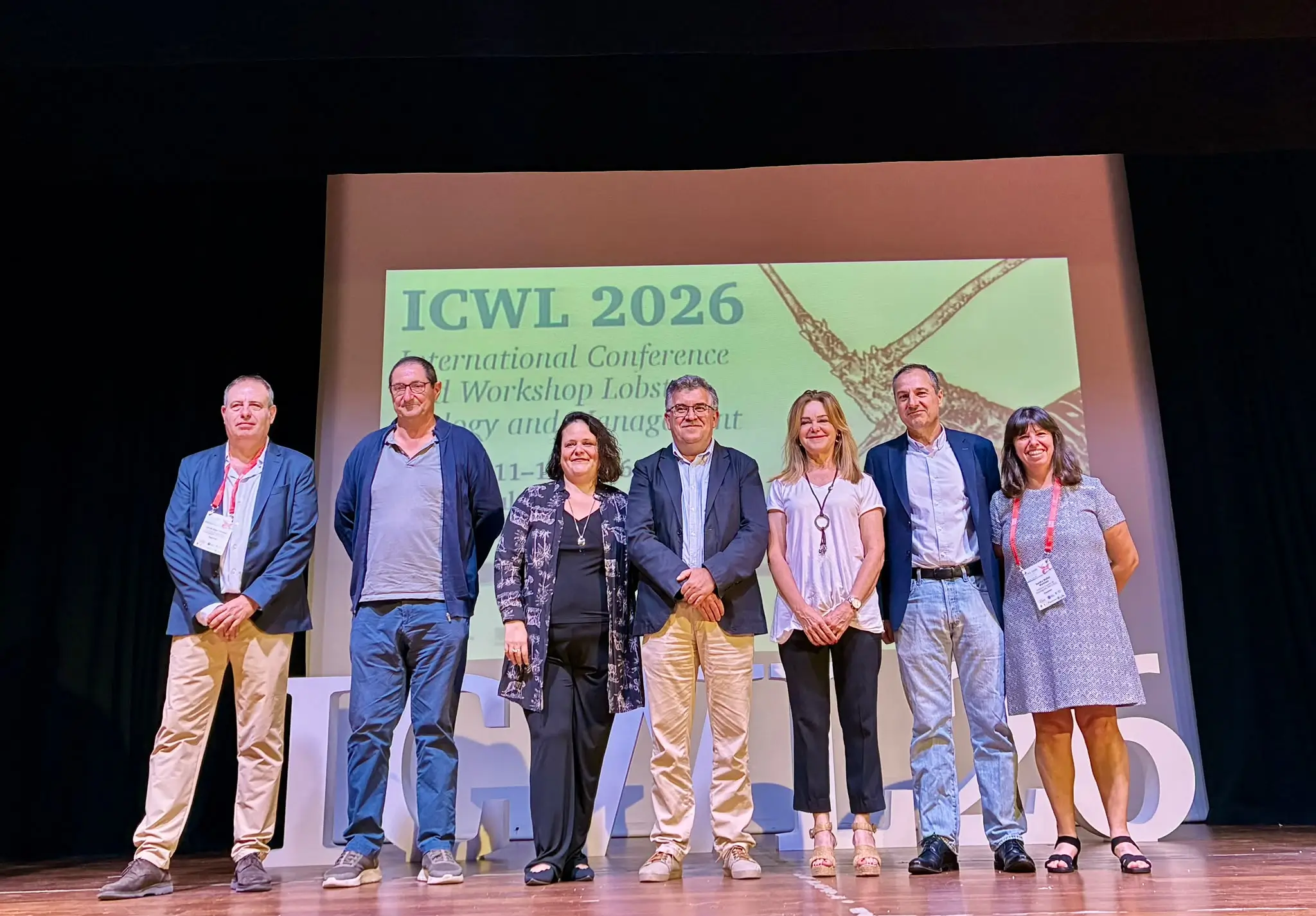
The official opening of ICWL 2026 took place at the Cap Vermell Cultural Centre, with the participation of Joan Simonet, the Balearic Islands’ Minister for Agriculture, Fisheries and the Natural Environment. Also in attendance were representatives of the organising committee, Capdepera mayor Núria García, and Gotzon Basterretxea, the CSIC’s institutional delegate in the Balearic Islands.
During the opening ceremony, Simonet highlighted the close connection between lobsters, artisanal fishing and the identity of the Balearic Islands. Research into this species not only expands scientific knowledge of the marine environment but is also essential to ensuring sustainable fisheries management and the conservation of marine resources.
The conference focuses on several large crustacean species, including the red spiny lobster, European lobster and Mediterranean slipper lobster, with international specialists from a range of scientific disciplines taking part.
Science and artisanal fishing: key to lobster management
One of the main themes of the conference is the link between scientific research and fisheries management. The programme covers a wide range of topics, from aquaculture and juvenile production to genetics, physiology, pathology, reproduction and population dynamics.
The effects of oceanographic processes and climate change are also being examined, alongside stock assessments and recruitment processes, which are essential for understanding how species populations evolve and managing their exploitation.
Practical discussions will take centre stage on Wednesday, with a workshop involving fishers and an international roundtable. Representatives from the fishing industry, producer organisations, the scientific community and fisheries management authorities will share experiences and perspectives on the management, marketing and certification of large-crustacean fisheries.
The importance of lobster fishing in the Balearic Islands
The Balearic Islands have a particularly close relationship with lobster fishing. According to the regional ministry, the archipelago is the only region in Spain where a fishery specifically targeting this species still exists, with strong links to the artisanal fishing fleet.
Lobster fishing is subject to a seven-month closed season. Since 2025, this fishery has also been managed through a co-management model involving the fishing sector, the scientific community and the public administration.
This system aims to combine scientific knowledge with the experience of professionals working at sea and the management capacity of public institutions. Such collaboration is particularly important for addressing conservation challenges and ensuring the future of an activity deeply rooted in the islands’ fishing traditions.
More than four decades of marine research in Mallorca
Research into marine resources has a long history in the Balearic Islands. The Institute for Agri-food and Fisheries Research and Training (IRFAP), through its Marine Research and Aquaculture Laboratory (LIMIA), has been conducting research in this field since 1982.
Its facilities have hosted various lobster studies, including tagging and captive-maintenance projects carried out in collaboration with researchers from different institutions. This work continues today through cooperation with the IEO-CSIC’s Balearic Islands Oceanographic Centre and other scientific organisations.
Hosting ICWL 2026 in Cala Rajada further strengthens Mallorca’s role as a meeting point for marine research and the exchange of knowledge on the conservation and management of fisheries resources.
The conference also explores research into the blue crab
The scientific programme also includes a dedicated session on the blue crab, an invasive species in the Mediterranean. The session will feature international specialists working in areas such as genetics, pathology, growth, ecology, aquaculture and fisheries.
Including this topic broadens the discussion around large crustaceans and addresses the challenges involved in both conserving commercially important species and managing those that can disrupt marine ecosystems.
With participants from 17 countries and around 50 institutions, ICWL 2026 puts Cala Rajada at the centre of an international scientific gathering focused on the future of large crustaceans, sustainable fisheries and the role of research in protecting marine resources.




Leave A Comment