
There are many ways to explore Mallorca, but few are as direct as visiting its markets. They bring together produce, territory, craft and everyday life: the farmer bringing seasonal fruit, the artisan preserving inherited techniques, the neighbour doing the weekly shopping and the visitor discovering the island through colours, aromas and conversations.
From the great village markets to Palma’s municipal markets, from stalls selling sobrasada, cheese, olive oil or herbs to pottery, basketry, llengües fabrics and second-hand objects, every stall tells part of Mallorca’s identity.
There are also markets that reflect new sensitivities, such as organic and local produce, and others that keep alive the pleasure of browsing, finding and being surprised. Exploring Mallorca’s markets means sharing a tradition that continues to beat week after week.
Village markets with history and character
Sineu is one of Mallorca’s great historic markets and preserves an unusual feature: the presence of farm animals, a reminder of its former agricultural and livestock function. Every Wednesday, the centre of the village fills with stalls selling local produce, crafts, plants, textiles and all kinds of objects.
Inca’s Thursday market is one of the largest and most complete on the island. Its commercial character connects with the city’s tradition of leather and footwear, two of its defining identities. It is a broad, popular and highly representative market in central Mallorca.
On Sundays, Santa Maria del Camí hosts one of the busiest and most appreciated markets among residents and visitors. It stands out for its local produce, square atmosphere and link with an area closely connected to wine, gastronomy and the agricultural life of the Raiguer region.
In the north, Pollença combines market and historic setting. Its stalls spread across squares, stone streets and cafés, with a mix of food, crafts, clothing, plants and typical products. Nearby, Alcúdia adds the appeal of its walled town, turning the Tuesday and Sunday market into a walk through history, commerce and urban life.
Santanyí offers one of the most carefully composed images of the Mallorcan market. On Wednesdays and Saturdays, its golden-stone streets host stalls selling crafts, decoration, fashion, local produce and food, in a highly recognisable Mediterranean atmosphere.
In the Llevant area, Artà preserves a more unhurried market, closely tied to the character of the town, its historic centre and the life of the surrounding area. Felanitx, meanwhile, maintains a broad and popular Sunday market, with fresh produce, clothing, assorted objects and a strong connection with southeastern Mallorca.
In the Serra de Tramuntana, Sóller holds its market every Saturday, closely linked to the valley, citrus fruits, mountain landscape and the atmosphere of its main square. In the south, Llucmajor preserves a strong market tradition around Plaça d’Espanya, with market days featuring fresh produce, clothing, crafts, accessories and second-hand objects.
From Sineu to Llucmajor, these markets reveal a plural Mallorca: agricultural, commercial, artisanal, historic and everyday. An island that continues to gather, week after week, around its squares.
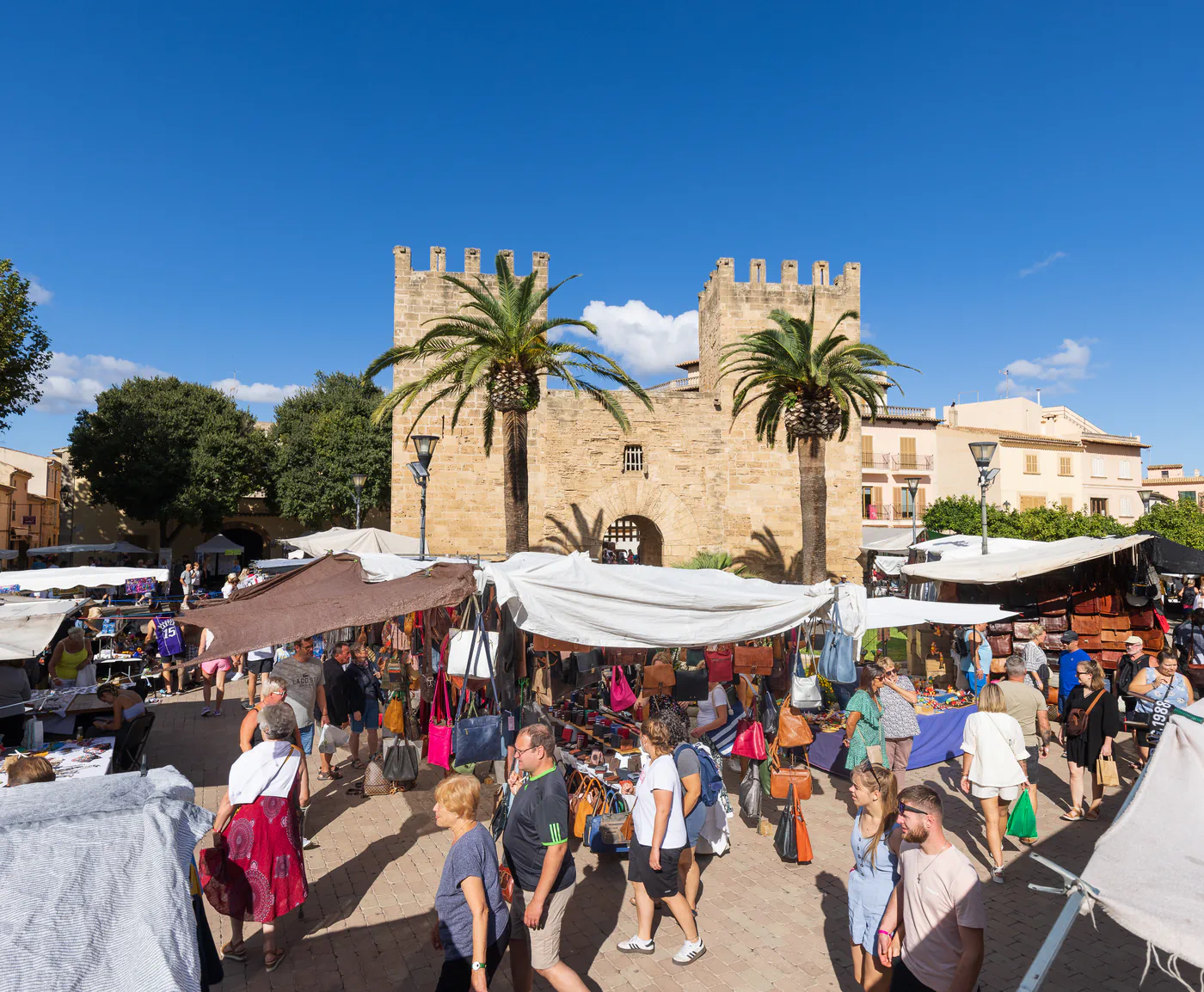
Alcúdia Market.
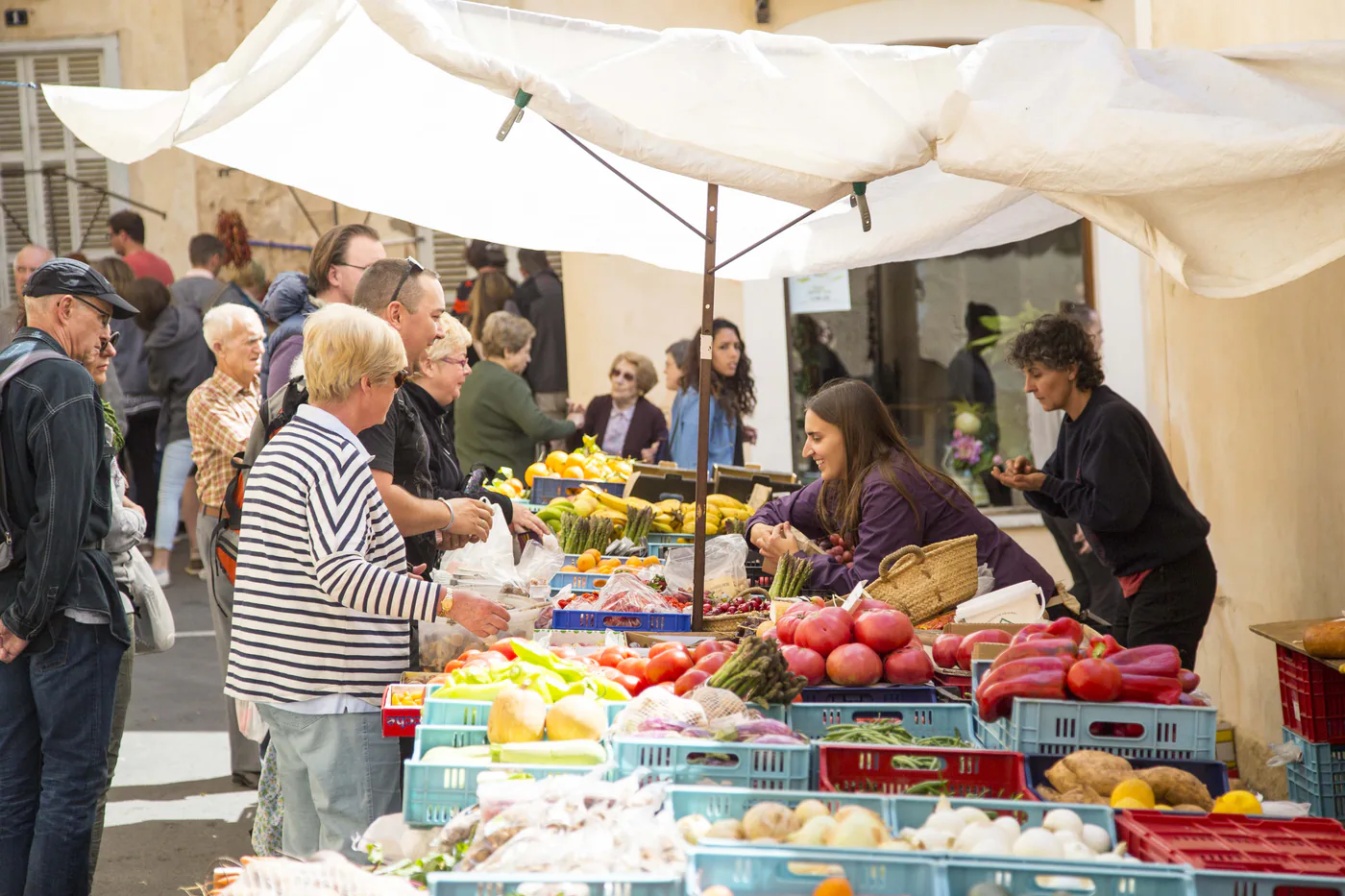
Sineu Market.
What to buy: crafts, objects and pieces of the island
In Mallorca’s markets, alongside fruit, vegetables and local produce, you will find objects that speak of the island’s material memory. Some are decorative pieces; others are utensils born from rural life; and many belong to a craft tradition that has adapted to contemporary taste without losing its roots.
One of the most recognisable is the siurell, a small whitewashed clay figure decorated with green and red brushstrokes. Traditionally associated with Marratxí, this ceramic whistle is one of Mallorca’s popular symbols and can still be found in markets, fairs and artisan shops.
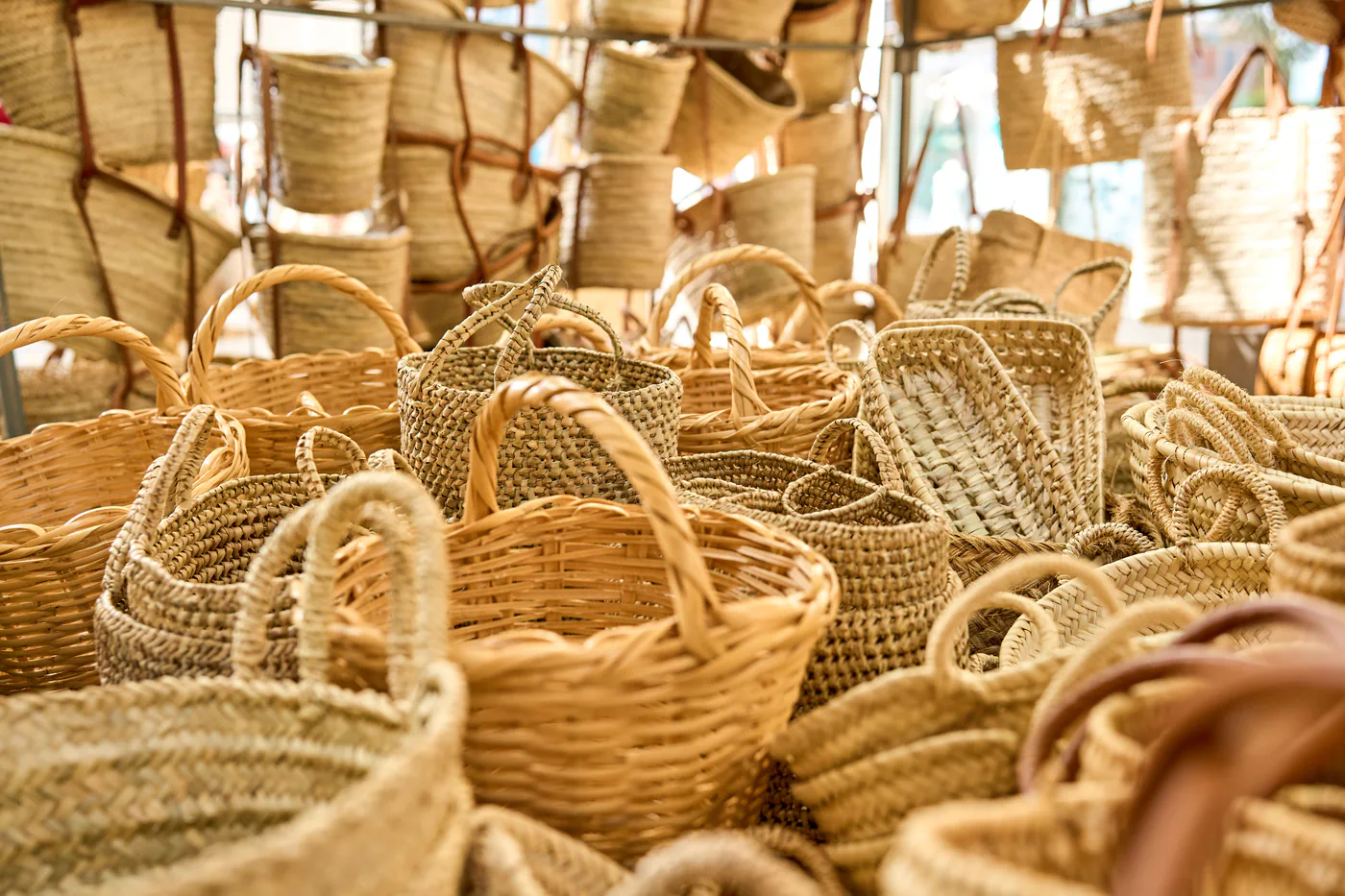
Pauma work also stands out, made from woven dwarf palm leaves. This technique produces baskets, shopping bags, hats, handbags, bread baskets and domestic objects that evoke rural Mallorca and manual work, especially linked to the Llevant area. In the markets, pauma remains a highly recognisable presence, somewhere between utility, decoration and identity.
Llengües fabrics provide another unmistakably Mallorcan image. Their irregular patterns and vivid colours appear on cushions, tablecloths, handbags, washbags and home textiles. They are one of the island’s great visual languages and connect the market with decoration, interior design and a well-chosen souvenir.
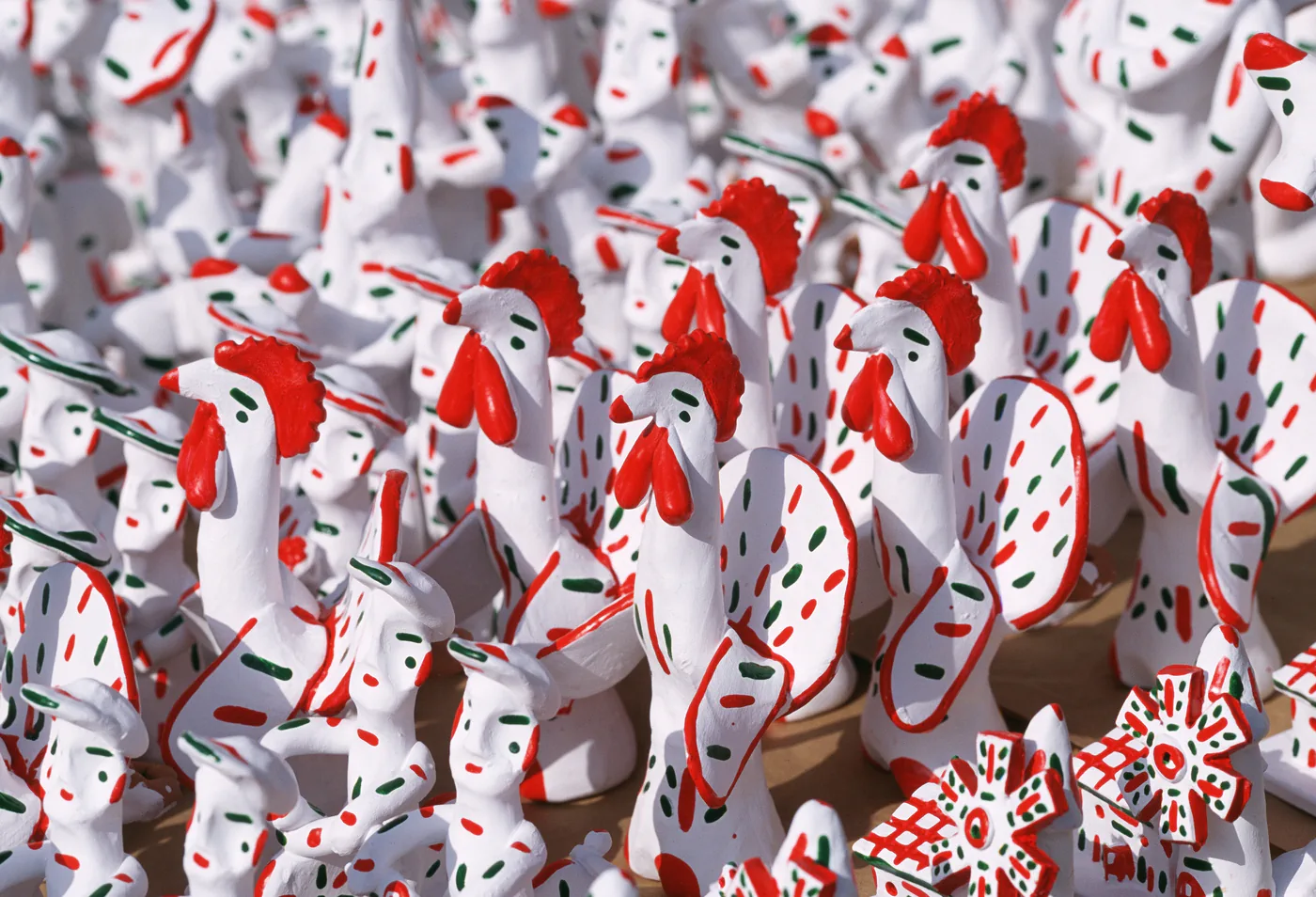
Siurells – Climent Picornell – Photo AETIB
Ceramics and pottery continue to occupy an important place among the stalls: plates, bowls, jugs, flowerpots, painted pieces, fired clay and objects for the kitchen or garden. They are joined by other crafts and materials such as blown glass, wood, leather and handmade jewellery.
Footwear also has its own weight, especially thanks to the shoemaking tradition of Inca and the Raiguer region. Sandals, espadrilles, menorquinas, bags and leather accessories coexist with linen clothing, hats, baskets and light garments designed for the Mediterranean climate.
Plants and flowers add colour to many weekly markets: aromatic plants, pots, cacti, seasonal flowers, fruit trees and Mediterranean species that evoke patios, terraces and gardens. In Sineu, the market preserves an unusual feature: the sale of farm animals, an image that recalls its agricultural and livestock origins.
Among siurells, pauma, llengües fabrics, clay, leather and plants, the markets allow visitors to take away more than a souvenir. They offer a small sample of the crafts, materials and symbols that have accompanied everyday life in Mallorca for generations.
What to buy: flavours of Mallorca
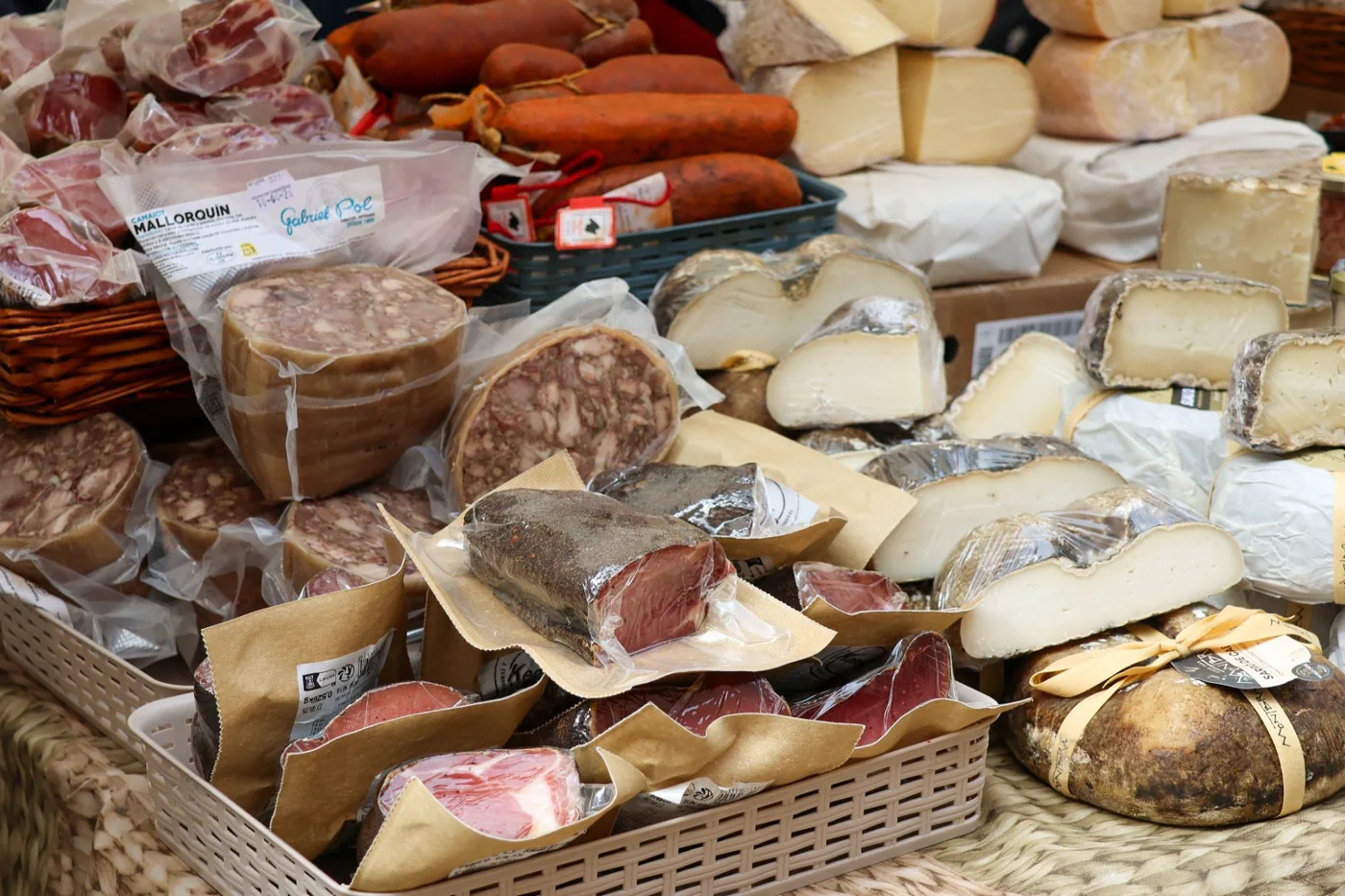
Mallorca’s markets can also be explored through taste. Their stalls display products closely linked to the island’s pantry, such as sobrasada de Mallorca, camaiot, botifarró, Mallorcan cheese, trencades olives, olive oil, Flor de Sal d’Es Trenc, almonds, honey, ramellet tomatoes and pan moreno.
The basket can be completed with cocas de trampó, cocarrois, rubiols, ensaimadas, almond gató, artisan jams, dried figs, apricots, Sóller citrus fruits and seasonal vegetables. The liquid flavours of the territory are also present, from island wines to hierbas mallorquinas, the traditional liqueur made with aromatic plants.
Buying food at a market means getting close to seasonal produce, small producers and a very direct way of tasting Mallorca.
Palma and its municipal markets
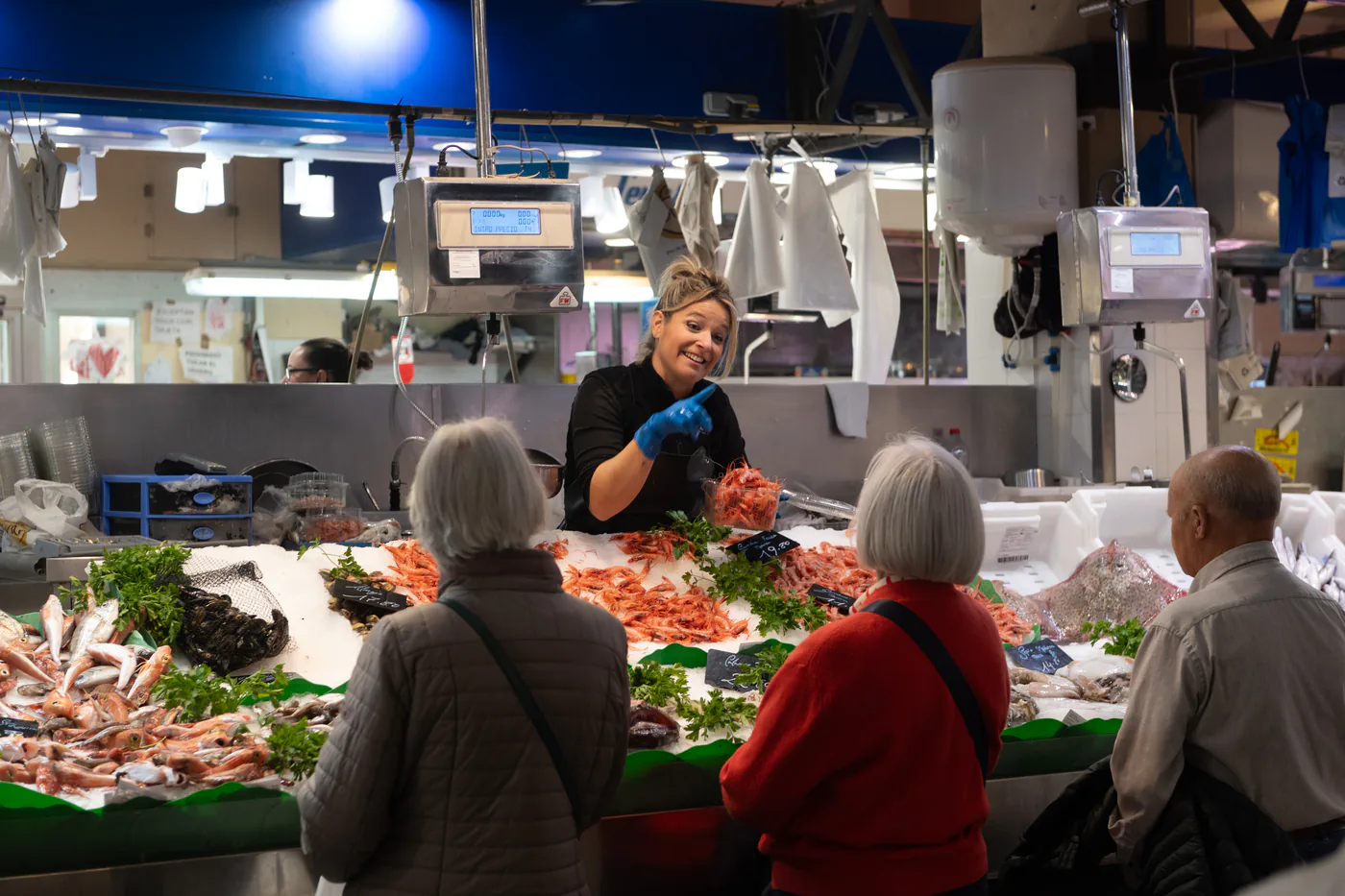
In Palma, municipal markets keep neighbourhood shopping alive and, at the same time, have become gastronomic spaces where you can look, taste and stay. Mercat de l’Olivar, in the city centre, is Palma’s great urban market: fish, seafood, meat, fruit, vegetables, pickles, cheeses and bars where produce can be enjoyed almost on the spot.
Mercat de Santa Catalina preserves the character of one of Palma’s liveliest neighbourhoods. Smaller and more intimate, it combines traditional stalls with a strong aperitif culture: tapas, vermouth, fresh produce and midday atmosphere among neighbours, chefs and visitors.
Mercat de Pere Garau offers another view of the city. Popular, multicultural and closely connected to the everyday life of the neighbourhood, it brings together fresh produce inside and an outdoor market in the square on certain days of the week. It is one of the places where Palma appears at its most diverse, direct and authentic.
Between the historic centre, Santa Catalina and Pere Garau, Palma’s municipal markets allow visitors to explore three different versions of the city: gastronomic, social and neighbourhood-based.
Organic and local produce
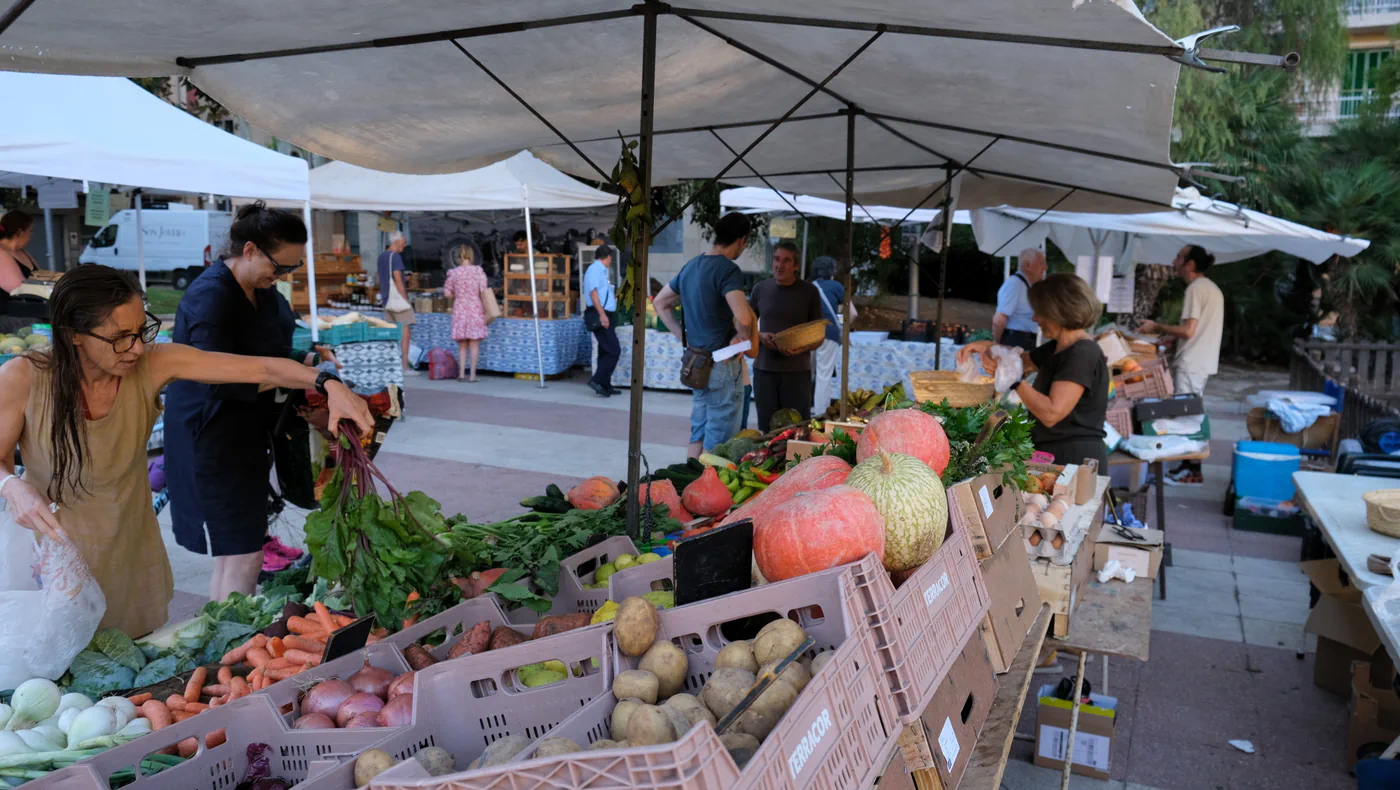
The search for organic, local and seasonal produce has a clear reference point in Palma: the Mercat Ecològic, held in Plaça dels Patins on Tuesday and Saturday mornings, from 8:00 a.m. to 2:00 p.m. It was created as a direct sales space between producers, makers and consumers, and today works as a small open-air pantry for those who want to shop with greater awareness of origin.
Its stalls offer fruit, vegetables, bread, flours, olive oil, cured meats, cheeses, eggs, honey, wine, preserves and other certified products. Its value lies not only in the organic label, but also in the possibility of speaking directly with those who grow, make or know each product first-hand.
Beyond Palma, local produce is also present in many of the island’s weekly markets, especially in places such as Santa Maria del Camí, Sineu, Artà, Pollença and Santanyí, where local producers, artisan makers and seasonal stalls coexist.
Rather than a large showcase, the Mercat Ecològic proposes a more intimate scale: less noise, more seasonality and a more direct relationship with the land. A way of shopping that connects with an agricultural, conscious Mallorca that is increasingly attentive to the value of what is close.
Antiques and second-hand
The Rastro de Consell is the great reference point for second-hand and antique markets in Mallorca. Every Sunday morning, its stalls bring together furniture, vintage clothing, books, records, paintings, lamps, ceramics, tools, decorative objects and unexpected pieces. Its appeal lies in the search: you do not go with a closed list, but with time to look, compare, ask and be surprised.
The island also has other markets where second-hand goods play a leading role. In Palma, the Son Fuster market takes place on Saturdays and is focused on exchange, opportunities, antiques and the reuse of objects. In Calvià, the Son Bugadelles market, also held on Saturdays, combines antiques, collecting, used clothing, old furniture and second-hand items, with a social dimension linked to Projecte Home.
Between Consell, Son Fuster and Son Bugadelles, these markets propose a different way of shopping: more patient, more circular and more attentive to objects with history. In contrast to fast consumption, the flea market invites us to recover, reuse and find value where others only see used things.
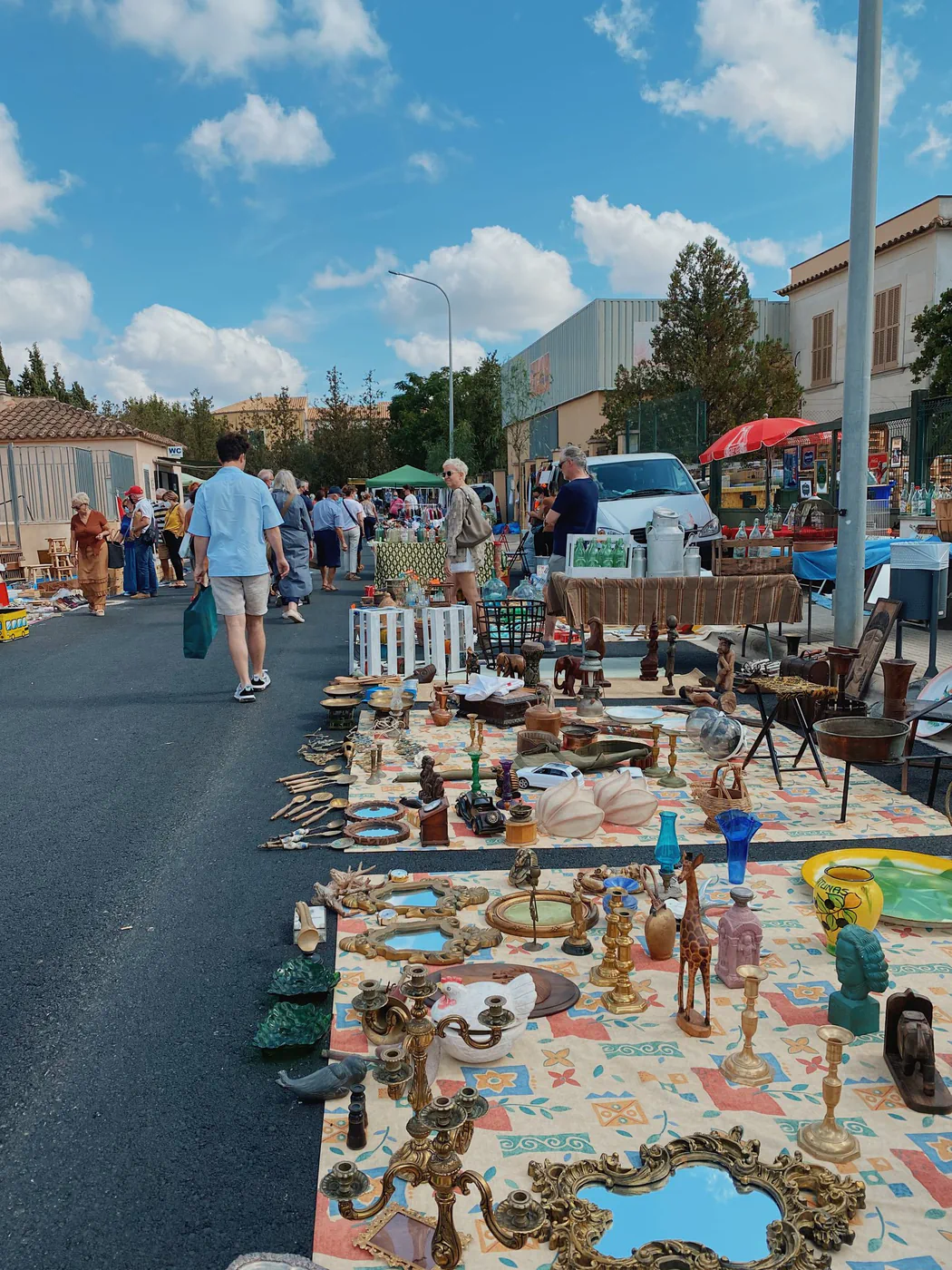
Consell Market – Photo Ajuntament de Consell
Practical guide to markets in Mallorca
Approximate opening times: most weekly markets take place in the morning. It is advisable to confirm times on public holidays, during high season or on special dates.
Monday
Calvià, Manacor, Montuïri, Caimari, Lloret de Vistalegre.
Approximate time: 8:00/9:00 a.m.-1:30/2:00 p.m.
Tuesday
Alcúdia, Artà, Campanet, Llubí, Porreres, Santa Margalida, Colònia de Sant Jordi, Peguera.
Approximate time: 8:00/9:00 a.m.-1:30/2:00 p.m.
Wednesday
Sineu, Santanyí, Andratx, Capdepera, Petra, Port de Pollença, Selva, Sencelles, Vilafranca de Bonany, Llucmajor, Bunyola, Marratxí, Deià, El Toro.
Approximate time: 8:00/9:00 a.m.-1:30/2:00 p.m.
Thursday
Inca, Campos, Consell, Ses Salines, Sant Joan, Sant Llorenç des Cardassar, Ariany, Lloseta, Pòrtol, s’Arenal, Magaluf.
Approximate time: 8:00/9:00 a.m.-1:30/2:00 p.m.
Friday
Llucmajor, Binissalem, Maria de la Salut, Algaida, Son Ferrer, Can Picafort.
Approximate time: 8:00/9:00 a.m.-1:30/2:00 p.m.
Saturday
Sóller, Santanyí, Campos, Bunyola, Búger, Cala Ratjada, Costitx, Esporles, Santa Margalida, Mercat Ecològic de Palma, Son Fuster, Son Bugadelles.
Approximate time: 8:00/9:00 a.m.-1:30/2:00 p.m.
Sunday
Santa Maria del Camí, Pollença, Alcúdia, Felanitx, Llucmajor, Muro, Sa Pobla, Valldemossa, Rastro de Consell.
Approximate time: 8:00/9:00 a.m.-1:30/2:00 p.m.
Palma’s municipal markets
Mercat de l’Olivar, Mercat de Santa Catalina and Mercat de Pere Garau.
Open Monday to Saturday in the morning.
Organic produce
Mercat Ecològic de Palma, in Plaça dels Patins.
Tuesdays and Saturdays, from 8:00 a.m. to 2:00 p.m.
Antiques and second-hand
Rastro de Consell, on Sunday mornings.
Son Fuster, in Palma, and Son Bugadelles, in Calvià, on Saturday mornings.
Feature included in the Mallorca Caprice 2026-2027 guide. View the guide in PDF here.


Leave A Comment